2003 — Baghdad
Six people sleeping in one room, blankets over the windows against shattering glass, the sky black from burning oil trenches meant to hide the city from the warplanes.
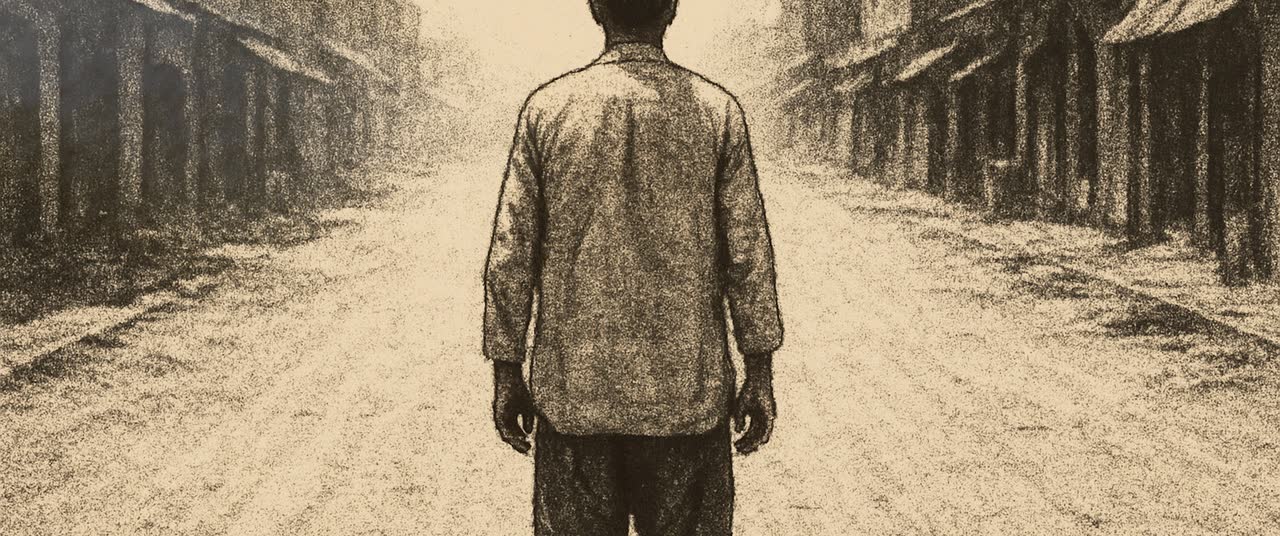
One of the boys who listened grew up inside the militia and stayed there. He is alive. He is still inside.
He tells his half of the same events under a code name. It is the thing almost no war story has: the other side’s own testimony, given while it is still dangerous to give.
2003 — Baghdad
Six people sleeping in one room, blankets over the windows against shattering glass, the sky black from burning oil trenches meant to hide the city from the warplanes.
2005 — Sadr City
A poor kid working a militia repair shop because the militia controlled every job. He was the boy who cleaned out the vehicles. Then Americans talked to him about democracy — a word he had never heard at home, at school, or at the mosque.
October 2019 — Tahrir Square
The young people started a revolution: a secular government under the rule of law, equal rights for women, and the removal of the men who took power after 2003. The government shut down the internet to stop them.
Now
He works beside the officials he is spying on, plays dumb, and sits inside their group chats. His friends have been killed. He keeps going.
He is alive, inside an Iranian-backed structure, naming it. On screen he appears only in the film’s illustrated register, with an altered voice and no identifying detail — the same protection Flee used for its subject, and the reason that film is the exact precedent for this one.
In the cuts on this site his two lines are read by a synthetic voice that has been pitch- and formant-shifted — audibly altered, so the alteration reads as an alteration rather than as a natural voice. The voice log records exactly that.